How real-time call translation actually works
What happens in the second between you speaking and the other person hearing your words in their language — and why that second is so hard to shorten.
Prakash Vakhesa · August 18, 2026 · 2 min read
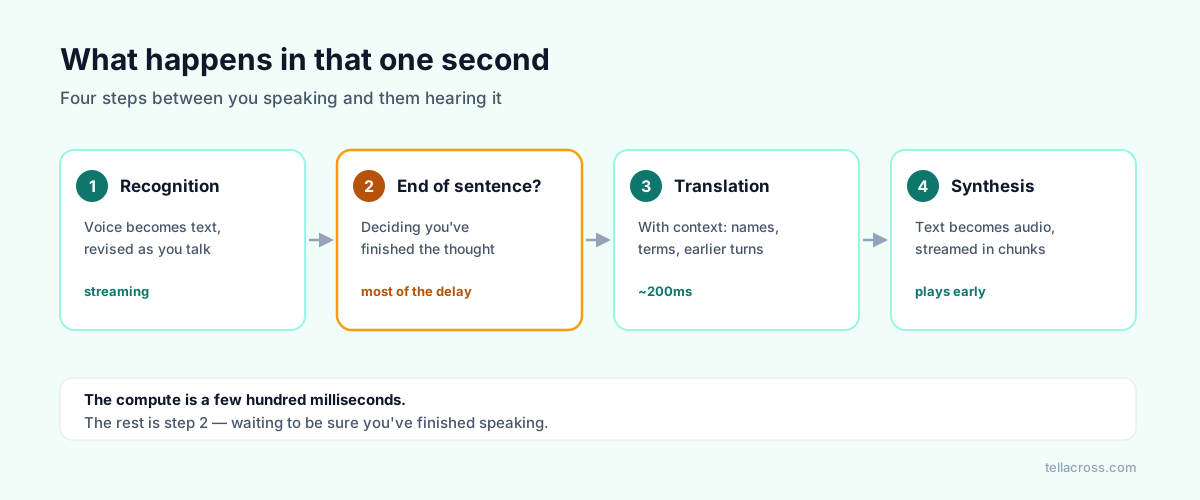
Most people assume live translation is one step: audio goes in, translated audio comes out. It's actually four, and every one of them adds delay you can feel in a conversation.
The four steps
Speech recognition. Your voice is streamed to a model that turns sound into text as you talk. It doesn't wait for you to finish a sentence — it emits partial guesses and revises them, which is why a live transcript sometimes rewrites itself mid-word.
Deciding when you've stopped. This is the step nobody expects. Translating a half-finished sentence produces nonsense, so the system has to judge when a thought is complete. Wait too long and the conversation drags; commit too early and you translate a fragment.
Translation. The committed text is translated with the conversation's context — names, industry terms, and what was said three turns ago all matter. Translating each sentence in isolation is what makes most tools feel robotic.
Speech synthesis. The translated text becomes audio in the listener's language. It streams out in chunks, so playback starts before the whole sentence is generated.
Why the delay is mostly waiting, not computing
Add up the actual compute and it's a few hundred milliseconds. The rest is waiting for you to finish talking, because none of the later steps can start until step two decides the sentence is done.
That's the real engineering problem in this space. Making the models faster helps less than you'd think. Deciding sooner and correctly that a sentence has ended is what makes a conversation feel natural instead of stilted.
What this means when you're on a call
A few practical things follow from the above:
- Speak in complete thoughts. Trailing off mid-sentence gives the system nothing clean to commit.
- Pauses are useful. A brief pause is the clearest possible signal that you're done.
- Background noise costs accuracy. Speech recognition trained on human speech will try to interpret a television, and confidently produce something wrong.
None of this requires changing how you speak much. But knowing where the second goes makes it obvious why a quiet room and finished sentences produce dramatically better results than shouting over a café.