Working with clients who don't speak English — a practical guide for immigration practices
The ethics rules, the interpreter-versus-translator distinction, why using a client's family member is risky, and how to handle the routine calls that fall between formal hearings.
Prakash Vakhesa · August 16, 2026 · 4 min read
Immigration practice is largely conducted with people who don't share your first language. The formal parts — hearings, sworn statements — have clear rules. The day-to-day parts are where most practices improvise, and where the risk quietly accumulates.
Interpreting and translation are different jobs
Worth stating plainly because the words get used interchangeably and it leads to real mistakes: interpreting is spoken, translation is written. They are separate professions with separate skills.
A document translation service is not who you want on a phone call. An interpreter is not who you want certifying a birth certificate. Hiring the wrong one produces work that's unusable for the purpose you needed it for.
Where the ethics rules bite
The competence and diligence obligations don't pause because of a language barrier. Lawyers with partial language skills who try to "wing it" and skip an interpreter can face ethical challenges on competence and diligence grounds for any resulting errors.
This is a genuinely uncomfortable area, because the failure mode is invisible. A client nods. You both proceed. The misunderstanding surfaces months later in a filing.
Confidentiality is the second exposure. Anyone interpreting for you hears privileged material. The guidance is to use interpreters bound by professional confidentiality agreements, to explain the obligation explicitly, and to have them sign something that says so.
Why family members are a bad default
It's the most common improvisation: the client brings an adult child who speaks English, and everyone gets through the meeting.
The problems are structural, not hypothetical.
No confidentiality obligation. They've signed nothing and owe you nothing.
They edit. Not maliciously — a relative softens bad news, omits an embarrassing detail, or answers on the client's behalf because they already know the answer. You never learn what was left out.
Some facts don't get said at all. Prior deportations, domestic violence, criminal history, immigration status of other family members. A client will often not disclose these in front of their child. These are frequently the facts the case turns on.
Children should never do it. Pro bono guidance is direct that you should find and use an interpreter rather than relying on the client's own arrangements, and to reuse the same one or two interpreters through a case for continuity.
The tier nobody plans for
Formal proceedings have interpreters — required at hearings and trials. Documents go to a translation service. Both are budgeted.
Then there's everything else: confirming an appointment, explaining which document is missing, telling someone their receipt notice arrived, checking they understood a form, answering the anxious call after a policy change hits the news.
Individually trivial. Collectively, this is the client relationship — and it's where practices lose people, not on the merits of the case but because nobody could explain what was happening.
Booking an interpreter for a ninety-second call doesn't work. Rates run roughly $1.25–$4.00 per minute, usually with a minimum, plus scheduling. So in practice these calls get skipped, deferred, or handled through whoever happens to be nearby — back to the family-member problem.
A workable split
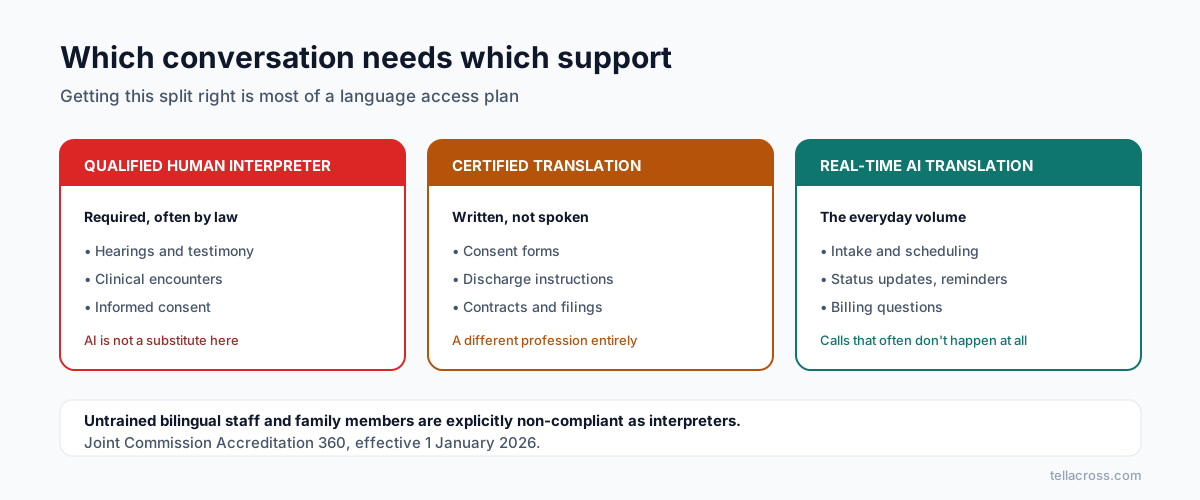
Hearings, sworn statements, consent, anything on the record → certified human interpreter. Not negotiable, often legally required.
Documents → professional translation with certification where needed.
Routine client contact → this is where real-time translation genuinely helps. The client speaks their language, you hear yours, both directions, with no booking and no third person on the line hearing privileged information. Any exportable transcript also gives you a record of what was actually communicated, which is worth having if a misunderstanding is ever disputed.
This is what we built TellAcross for, and why it covers Gujarati, Hindi, Punjabi, Bengali, Tamil, Urdu and Arabic properly rather than as an afterthought — those are the languages immigration practices actually need and most tools handle worst.
The practical checklist
- Decide the interpreting tier for each interaction before it happens, not while the client is on the phone.
- Get a confidentiality agreement signed by any human interpreter you use — including bilingual staff.
- Never let a minor interpret. Push back gently but firmly when a client offers.
- Ask open questions to confirm understanding. "Do you understand?" reliably gets "yes" regardless.
- Keep one interpreter across a case where you can. Continuity of terminology matters more than people expect.
None of this removes the need for professional interpreters where they're required. It reduces the number of conversations that don't happen at all — which, for most practices, is the bigger problem.