Selling to UAE and Gulf clients — English gets you the meeting, Arabic gets you approved
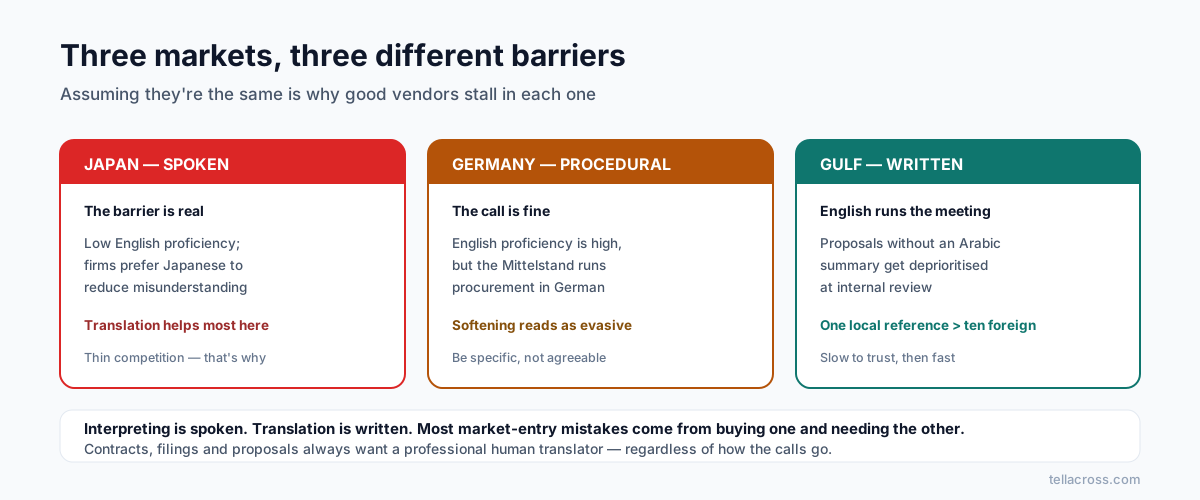
The Gulf runs its business in English, so the call is easy. Proposals without a bilingual Arabic summary get deprioritised at internal review, and no named local relationship reads as risk.
Prakash Vakhesa · September 1, 2026 · 3 min read
Disclosure: we make a call translation tool. The honest answer for the Gulf is that you'll need it less than you expect — the gap here is written, not spoken.
The Gulf is the market people most often misjudge in both directions. Some assume they need Arabic for everything; others assume English is sufficient end to end. Neither is right, and the distinction is worth getting exactly.
English is the business language. Genuinely.
English is the dominant business language across the UAE and the wider Gulf. The workforce is heavily international, meetings run in English, and your calls will be fine. Arabic matters in government, legal and locally-focused work — not in your average B2B conversation.
So if language was the thing stopping you approaching Gulf prospects: it shouldn't be. That barrier is largely imagined.
The real gap is written, and it's specific
Here's the detail that changes outcomes: documents without a bilingual Arabic executive summary are systematically deprioritised at internal review — even when the meeting itself was in English.
Read that again, because it explains a very common experience: the meeting went well, everyone spoke English, everyone was positive, and then nothing happened. Your proposal went into a review process where it sat below documents that were easier for the reviewing committee to process.
The fix is cheap. One page of Arabic at the front of every proposal — scope, timeline, price, contact. Professionally translated, not machine output. That single page moves your document up a queue.
Trust is the actual currency
Enterprise buying in the Gulf is highly relationship-driven, with decision authority concentrated in senior executives or ownership. Deals move fast once trust exists — often faster than in Europe — but that trust has to be built first, and it can't be shortcut with a good deck.
The corollary is sharper than most guides admit: procurement boards and investors read the absence of named UAE relationships as cultural and regulatory risk, regardless of how strong your international business is. Your track record in London or Bangalore doesn't transfer automatically. One credible local reference is worth more than ten impressive foreign ones.
What actually works
Invest in the relationship before the pitch. Multiple conversations, patience, genuine interest. The transactional approach that works in the US actively harms you here.
Get one local reference, early. A pilot, a small first engagement, a partner who'll vouch for you. This is the highest-leverage thing on this list.
Bilingual Arabic summary on every document. One page. Every time.
Expect hierarchy. The person you're talking to may not be the decision-maker, and pushing them to decide is counterproductive. Ask who else needs to be comfortable, and help them make your case internally — which is exactly what that Arabic summary is for.
Respect the calendar. Working weeks, prayer times and Ramadan genuinely change availability and pace. Scheduling around them without being asked signals that you've done the work.
Where translation fits, honestly
Rarely on calls. Your Gulf meetings will be in English with an international team. Buying a translation tool for this market on the assumption that you need Arabic on calls would be solving a problem you don't have.
Sometimes, in specific cases: government and public-sector conversations, family-business owners who prefer Arabic, technical or site staff, and any moment where a senior stakeholder joins who'd rather speak Arabic. Being able to switch — rather than making them accommodate you — matters more in a relationship-driven culture than the raw translation does. That's the case where TellAcross fits, and it's a narrower case than in Japan.
Mostly, use document translation. Human, professional, for the Arabic summary and any contractual material. Different profession from interpreting, and worth paying for.
The summary
Japan's barrier is spoken. The Gulf's is written and relational. Getting that backwards is why competent vendors have great meetings in Dubai and never hear back.
Your English is enough for the conversation. Put one page of Arabic at the front of the proposal, get one local reference, and be patient through a relationship-building phase that will feel slow right up until the moment it becomes very fast.