Factory and QA calls — when a defect discussion happens in two languages
A defect dispute is a negotiation disguised as a technical conversation. The specification was clear, the inspection report says one thing, the factory says another — and precision is the only thing standing between you and eating the cost.
Prakash Vakhesa · October 1, 2026 · 4 min read
Disclosure: we make TellAcross, a call translation tool. This covers the quality conversation specifically — if you're earlier in the process and choosing suppliers, the sourcing side is a separate post.
There's a specific call every importer eventually makes. Inspection has flagged a problem, the shipment is sitting there, and you're on the phone to a factory that does not agree with your inspector.
It looks like a technical conversation. It is a negotiation about who pays, conducted in vocabulary neither side fully shares.
Why this call is harder than the others
Most supplier communication is cooperative. This one isn't — both sides have money at stake and a reason to interpret the evidence favourably. Add a language gap and three things go wrong at once.
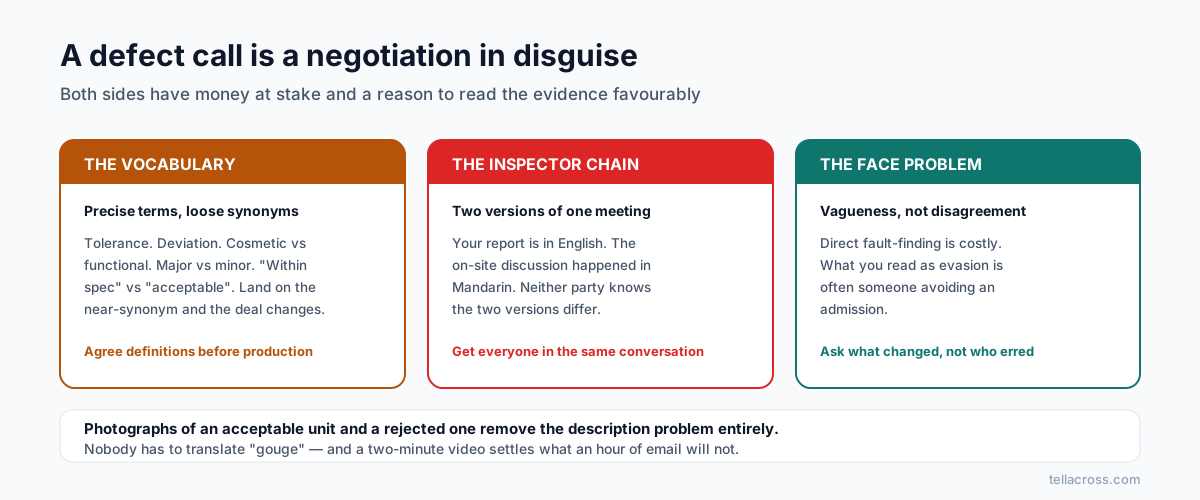
The vocabulary is unusually precise and unusually easy to approximate. Tolerance, deviation, cosmetic versus functional, major versus minor defect, AQL levels, "within spec" versus "acceptable". These terms have exact meanings in a quality context and near-synonyms in everyday language. A translation that lands on the near-synonym changes what was agreed.
Face is directly engaged. You are telling someone their work is defective. In the high-context cultures where most manufacturing sits, direct fault-finding is costly, and the response is often not disagreement but vagueness — which reads to a Western buyer as evasion and escalates a solvable problem.
Everyone is describing something physical using words. "There's a mark on the surface" covers a scuff you'd ship and a gouge you wouldn't.
The third-party inspector problem
Most importers use a third-party inspection firm, which is right. But it introduces a translation chain that people rarely think through.
Your inspector writes a report in English. They discussed the findings on-site with the factory in Mandarin or Vietnamese. The factory's understanding of what was agreed came from that spoken conversation; your understanding came from the written report. Those two things can differ substantially, and neither party knows it.
Then you call, referencing the report, and the factory responds to a conversation you weren't part of. The argument that follows isn't really about the defect.
If a dispute is developing, get everyone into the same conversation rather than relaying through the report.
What actually works
Define defect classifications in both languages before production, not during the dispute. What counts as major, minor and cosmetic, with photographs. This single document prevents more argument than anything else available, because it converts a vocabulary disagreement into a comparison.
Use photographs as the shared reference. A picture of an acceptable unit and a picture of the rejected one removes the description problem entirely. Nobody has to translate "gouge".
Video the specific defect, live, during the call. Two minutes of camera on the part settles what an hour of email won't.
Give the factory a face-preserving route to agree. "Help me understand what changed in this batch" gets further than "this is defective". You want the cause, not an admission — and you'll get the cause faster if agreeing doesn't require humiliation.
Confirm in writing afterwards, in both languages, with the specific numbers: how many units, which classification, what remedy, by when. Restating this is a comprehension check both sides can correct cheaply.
Read every number back. Quantities, tolerances, batch numbers, dates.
Where a translation tool fits — and where it doesn't
It fits the working conversation. The call with the QA manager about what inspection found. The video walkthrough of the line. The follow-up on a corrective action. The routine pre-shipment check-in. These are frequent, time-sensitive, and today they either wait for someone bilingual or happen in broken English that leaves both sides guessing.
TellAcross covers that: browser link with nothing for the factory to install, Chinese, Vietnamese and 60+ languages both directions, exportable transcripts for the quality file, per-minute pricing. Ten free minutes a month is enough to try it on one QA call.
It does not fit a formal claim. Once you're seeking compensation, invoking a contract term, or heading toward arbitration, get a qualified interpreter and a professional translator. Anything that might be read out later needs a person accountable for the words.
And it does not fit the specification itself. Your quality standard, defect classifications and acceptance criteria are written documents that govern money. Pay a human translator once and be done with it.
The honest summary
The defect call goes badly for two reasons that get blamed on language and mostly aren't. The specification was never agreed in both languages, and you're asking someone to admit fault in a culture where that's expensive.
Fix the first with a bilingual defect standard and photographs — that's a one-time cost that pays for itself the first time you use it. Handle the second by asking what changed rather than who erred. Then make sure that when the shipment is sitting and the inspector's report is disputed, you can actually talk to the person who knows what happened.