Winning international clients when English isn't the shared language
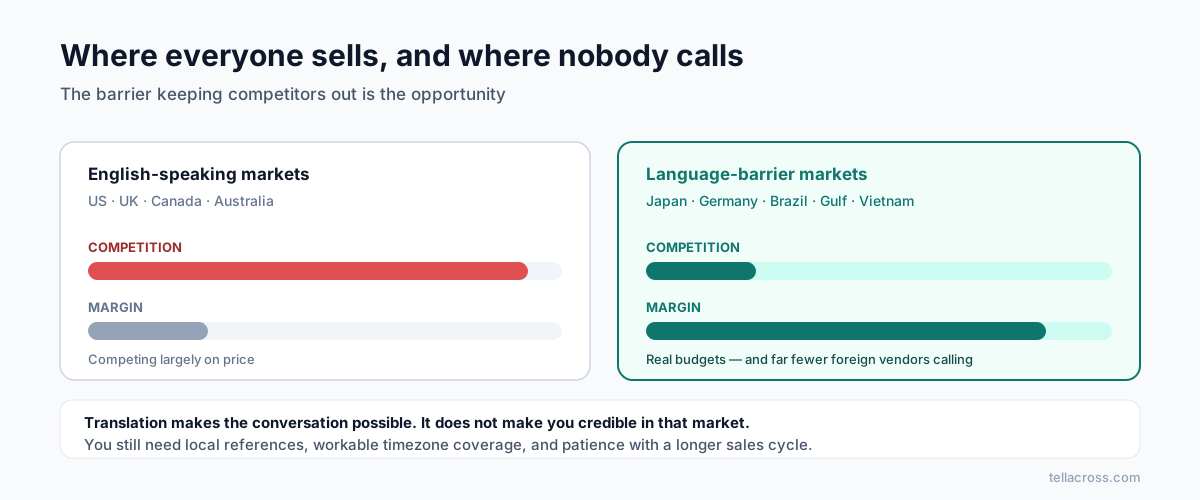
Most IT and services firms chase English-speaking markets because that's where they can sell. The margins are better in Japan, Germany, Latin America and the Gulf — and language is the reason nobody's competing there.
Prakash Vakhesa · August 27, 2026 · 4 min read
Disclosure: we build TellAcross, a real-time call translation tool, and it appears in the tooling section. Most of this post is about business strategy, which matters more.
If you run a software firm, agency or consultancy selling to clients abroad, your prospect list is probably English-speaking: US, UK, Canada, Australia. So is everyone else's. That's a crowded market competing largely on price.
The interesting observation is that the markets where language is a barrier are the markets where competition is thinnest and margins are best — and the barrier is smaller than it was two years ago.
Where the barrier actually sits
Three different situations, often conflated:
Their English is fine. Most enterprise buyers in Northern Europe, and technical teams in many markets. No barrier — go sell.
Their English is functional but effortful. Common in Japan, Korea, Latin America, parts of Southern Europe, the Gulf. They can do the call in English, but they're operating at a disadvantage, they're more guarded, and rapport builds slowly. This is where deals quietly don't progress and nobody can say exactly why.
No shared language. SMEs in Japan, Germany, Brazil, Vietnam, much of the Gulf. Real budgets, real needs, and most foreign vendors simply never call them.
The second category is the underrated one. The deal doesn't fail loudly — it just never quite closes, and both sides blame something else.
What changes when they speak their own language
A client who can speak their own language on your call will:
- explain their real requirements, not the subset they have vocabulary for
- raise objections, which is what lets you handle them — silent objections kill deals
- involve more of their team, including the decision-maker who doesn't speak English and has been receiving your pitch second-hand
- treat you as local, which matters more in relationship-driven markets than most Western vendors expect
That last point is the commercial one. In Japan and the Gulf especially, the vendor who made the effort is a materially different proposition from the one who didn't.
The practical playbook
Sales calls in their language. Discovery and requirements especially — precision matters most where misunderstanding is most expensive. Real-time translation means neither side is disadvantaged and neither is waiting on an interpreter's schedule.
Proposals in their language, even when they read English. It signals the relationship is worth effort, and it circulates internally to people who don't read English.
Delivery in English if that's what the contract says. Be honest about the working language for the engagement — over-promising here creates a delivery problem later. Selling in their language and delivering in English is a perfectly reasonable, statable arrangement.
Keep transcripts of requirements calls. Cross-language requirements gathering is where scope disputes are born. An exportable transcript is the cheapest insurance available.
What to look for in tooling
- The client installs nothing. A prospect will not create an account to take your sales call. Browser link, joined from a phone or laptop.
- Your specific pairs, both directions. Not a headline count — coverage is narrower than marketed, and outbound quality often differs from inbound.
- Transcript export, for the scope-dispute reason above.
- Per-minute pricing. Your international calls are bursty. Per-seat licensing for occasional use is waste.
- Industry terminology handling, if you sell into legal, medical or financial contexts where terms must stay exact rather than paraphrased.
TellAcross covers these — 60+ languages, browser-based, exportable transcripts, per-minute — with ten free minutes a month, which is enough to run one real discovery call before deciding anything.
For Indian firms specifically
If you're an Indian IT services company, your English is a genuine competitive advantage in US and UK markets — and it's also why you're competing against every other Indian firm there.
Japan, Germany, France, Brazil and the Gulf have serious IT budgets, chronic talent shortages, and far fewer offshore vendors calling them, precisely because those calls can't be done in English. That's the arbitrage: the barrier keeping competitors out is now one you can cross. Language was the moat; it's becoming a door.
The honest caveat
Translation makes the conversation possible. It doesn't make you credible in that market — you still need local references, timezone coverage they can live with, and patience with a longer sales cycle than you're used to. Firms that treat translation as the whole strategy tend to have one promising call and no second meeting.
Start with one market, one language, and ten calls. If the conversations are better than your English-market equivalents — and in underserved markets they usually are — that's your answer.