T-Mobile's live translation — how it works, and what to use if you can't get it
Dial *87* mid-call and the network translates the conversation in your own voice, 80+ languages, any phone. What the beta actually offers, its limits, and the alternatives while registration is closed.
Prakash Vakhesa · August 22, 2026 · 3 min read
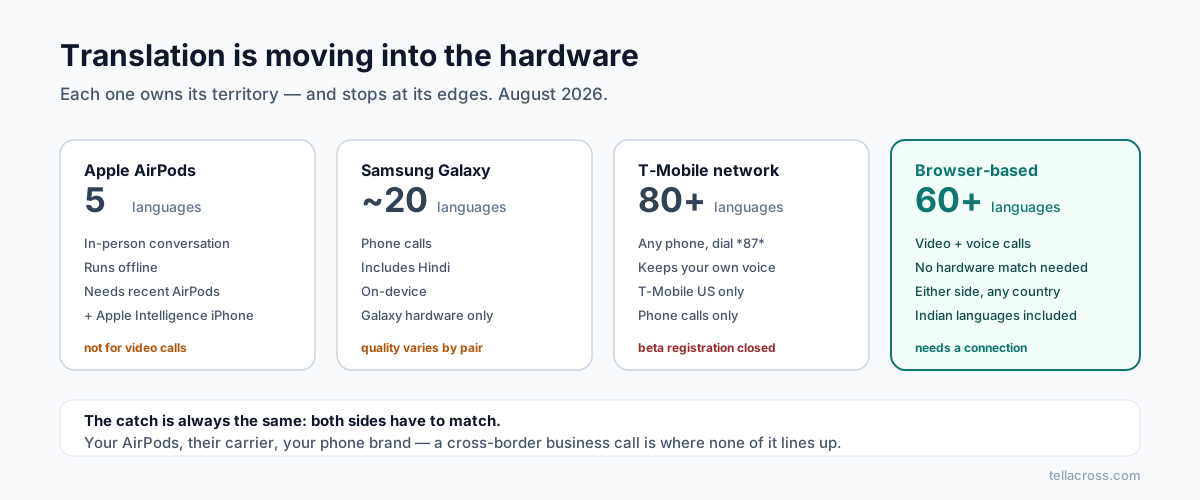
T-Mobile did something genuinely new: instead of putting translation in an app or a phone, they built it into the network itself. Searches for the beta are spiking, and the details are scattered — here's the whole picture in one place.
What it actually does
You're on an ordinary phone call. You dial 87 during the call, and the network starts translating the conversation both ways in near real time — in your own voice, which is the genuinely striking part. The other person hears your words in their language, sounding like you.
Because it runs on the network rather than the device, it works on any phone — including basic feature phones. No app, no download, no AirPods, nothing to install. That's a real accessibility win: the person most likely to need translation on a call is often the one with the oldest phone.
Coverage is broad too: 80+ languages and counting, which beats every device-based option on the market today.
The constraints
The beta is closed. Registration is currently closed while T-Mobile prepares the next phase. It was open to postpaid members and free for selected customers; pricing after the beta hasn't been announced. If you're searching "how to join" right now — you wait, unfortunately.
T-Mobile only, phone calls only. It's a US carrier feature: calls within the US, to select international destinations, and while roaming on select partner networks with VoLTE/5G. If you're on another carrier — or another country — it doesn't exist for you. And it translates phone calls, not video meetings, not in-person conversations.
One side controls it. The T-Mobile customer activates it. The person on the other end gets translation without needing anything, which is elegant — but if you're the one abroad calling a T-Mobile customer, you can't turn it on from your side.
Where this fits in the landscape
The pattern across 2026 is that translation is moving into infrastructure: Apple put it in AirPods, Google is putting it in Meet, T-Mobile put it in the network. Each covers its own territory and stops at its edges.
T-Mobile's territory: voice calls, on their network, in the US. Strongest language coverage of the built-ins, weakest availability — you need to be their customer and the beta needs to reopen.
If you can't get it (or need what it doesn't cover)
Be precise about which situation you're in:
You're on T-Mobile and can wait — keep an eye on the beta page; the next phase is coming and network-level translation on ordinary calls is worth having.
You need video calls translated — no carrier feature does this. Meeting platforms cover a handful of languages; TellAcross covers 60+ in the browser, both directions, on a link either side can open from any country, any carrier, any device. That last part is the structural difference: nothing about your setup or theirs has to match.
You need in-person conversation — that's the AirPods/Samsung territory, or a phone-based conversation mode.
Your language isn't covered anywhere — check the specific pair, not the headline number. 80+ is impressive, but "and counting" means some pairs are better than others, and the only honest test is running your actual language with a real speaker.
The encouraging read on all of this: the biggest companies in telecoms and tech are now competing on making language barriers disappear. Whoever you are, the tool that fits your exact situation either exists or is months away — the work is matching the tool to the situation rather than assuming any one of them covers everything.