Choosing translation for a customer support team — a buyer's guide
Chat translation is solved. Voice support in other languages is not. What to evaluate before you buy, which tool type fits which support model, and the costs that don't appear on the quote.
Prakash Vakhesa · August 24, 2026 · 4 min read
Disclosure: we build TellAcross, one of the tools in the voice category below. We've tried to write the guide we'd want to read, and to be explicit about where other options are the better buy.
Support teams hit language barriers in a specific order: email first, then chat, then voice. The first two are largely solved. Voice is where teams still improvise — and where the cost of getting it wrong is a customer who cancels rather than a ticket that takes longer.
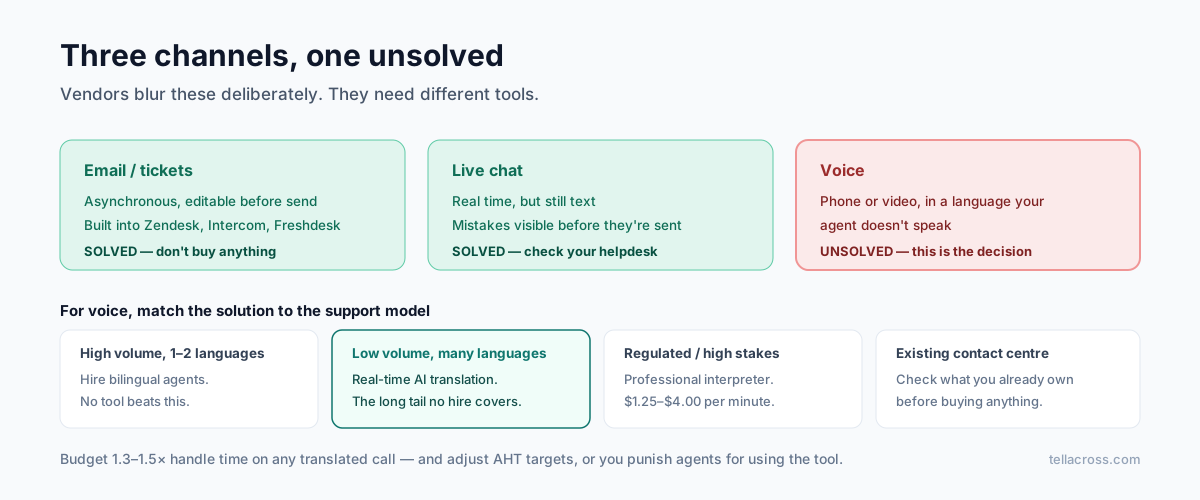
First, separate the three channels
They need different tools, and vendors blur this deliberately.
Email/ticket translation — asynchronous, text, editable before sending. Zendesk, Intercom and Freshdesk have this built in or one integration away. If you're evaluating a new product for this, you probably don't need one.
Live chat translation — real time but still text. Also broadly available in the major helpdesk platforms. Quality is good, latency is invisible, and mistakes are visible before they're sent.
Voice — phone or video support in a language your agent doesn't speak. This is the unsolved one, and the rest of this guide is about it.
What to actually evaluate
1. Your real language distribution, not your assumed one. Pull the last six months of tickets and count languages. Most teams discover the tail is longer than they thought — the fourth and fifth languages, individually small, together often exceed the second. A tool covering your top two brilliantly and nothing else may solve less than half your problem.
2. Spoken translation, not captions. Check which one a feature page is describing. Captions mean your agent reads while the customer talks; that isn't a phone conversation. The distinction hides real gaps — caption coverage is routinely 5-10x wider than spoken coverage in the same product.
3. Pricing model against your usage shape. Per-seat licensing suits teams where everyone needs it daily. Per-minute suits the far more common pattern: occasional calls in other languages, spread unevenly across agents. Ten agents needing it twice a month each is a bad fit for ten seats at $10/month.
4. Does it fit your existing stack, or does it need one? Some tools require both parties on a specific platform. A customer calling your support line is not going to install anything. Browser-based or phone-native options avoid this; platform-tied ones don't.
5. Transcripts. For support specifically, transcripts are half the value — ticket notes, QA review, and evidence of what was actually said when a customer disputes it. Check whether they're exportable, and who controls retention.
Which type fits which support model
High volume, one or two extra languages → hire bilingual agents. Genuinely. At sufficient volume in Spanish, a Spanish-speaking agent beats every tool, and nothing here changes that. Tools are for the long tail, not the head.
Low volume, many languages → real-time AI translation. This is the case the tail creates, and the case no staffing plan solves. TellAcross fits here: browser-based so the customer installs nothing, 60+ languages, per-minute rather than per-seat, transcript exportable to the ticket. Ten free minutes a month is enough to run a real call before deciding.
Regulated or high-stakes conversations → a professional interpreting service, at $1.25–$4.00 a minute. Insurance claims, medical advice, anything with legal consequence. Yes it's expensive; the alternative is worse.
Enterprise with an existing contact centre → check what your platform already offers before buying anything. Some contact-centre suites have added translation; an integrated mediocre option often beats a better standalone one that nobody remembers to open.
The costs that don't appear on the quote
Handle time. Any translated call runs longer. Budget 1.3–1.5x and adjust your AHT targets, or you'll punish agents for using the tool you bought.
Agent training. Speaking for translation is a learnable skill — short sentences, no idioms, the habits here. Twenty minutes of training measurably improves output quality on any tool.
The escalation path. Decide in advance what an agent does when translation clearly isn't working. Without a defined path they'll either struggle on or hang up — both worse than a documented "book an interpreter" route.
The one-week evaluation
Don't buy from a demo. Pick your third-most-common language, take five real calls with a shortlisted tool, and measure: did the customer's issue get resolved, how long did it take, and — the only question that really matters — would you have been comfortable if that call were recorded and played back to the customer?